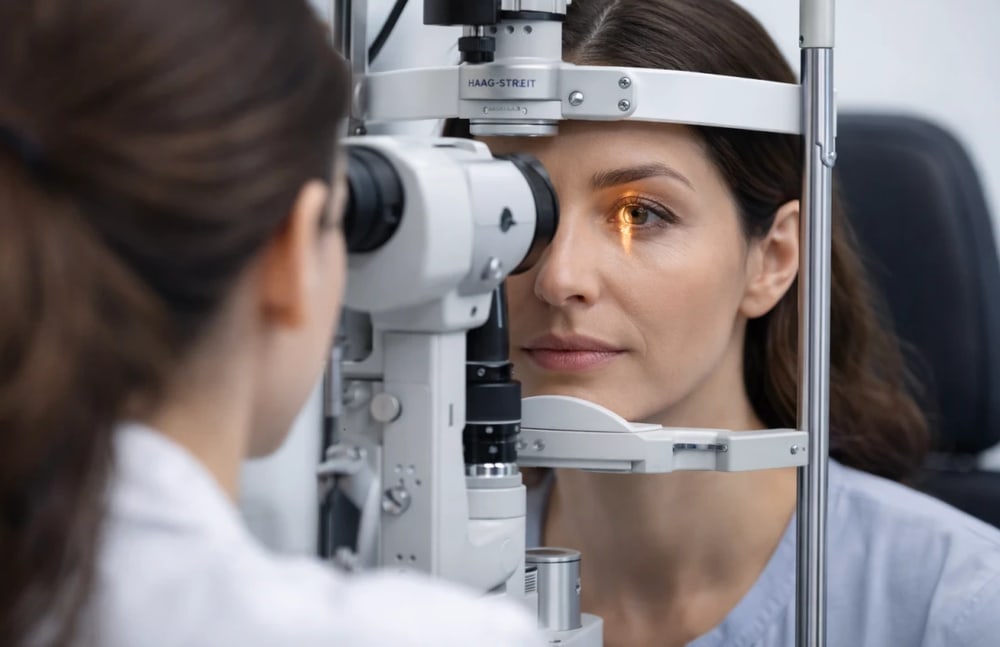
Shortly after birth, infants begin to perceive their surroundings visually — at first only in a blurred way. Through daily stimulation and practice, eyesight develops step by step. Full visual acuity is typically reached between the ages of 6 and 8 and stabilises further from around age 10–12. Early ophthalmic preventive examinations are therefore important, even in children without apparent symptoms, in order to detect and treat potential vision problems in good time.
Amblyopia (lazy eye) — early detection is crucial
The first four years of life are decisive for visual development. During this sensitive period, even minor disturbances can prevent eyesight from developing fully.
If left untreated, this can lead to permanent amblyopia (lazy eye) — even in anatomically healthy eyes. Common causes include squinting, refractive errors, unequal visual acuity between the eyes (anisometropia), or congenital changes. Regular preventive examinations allow for early diagnosis and help prevent lasting visual impairment.
Children's glasses — optimal support from the start
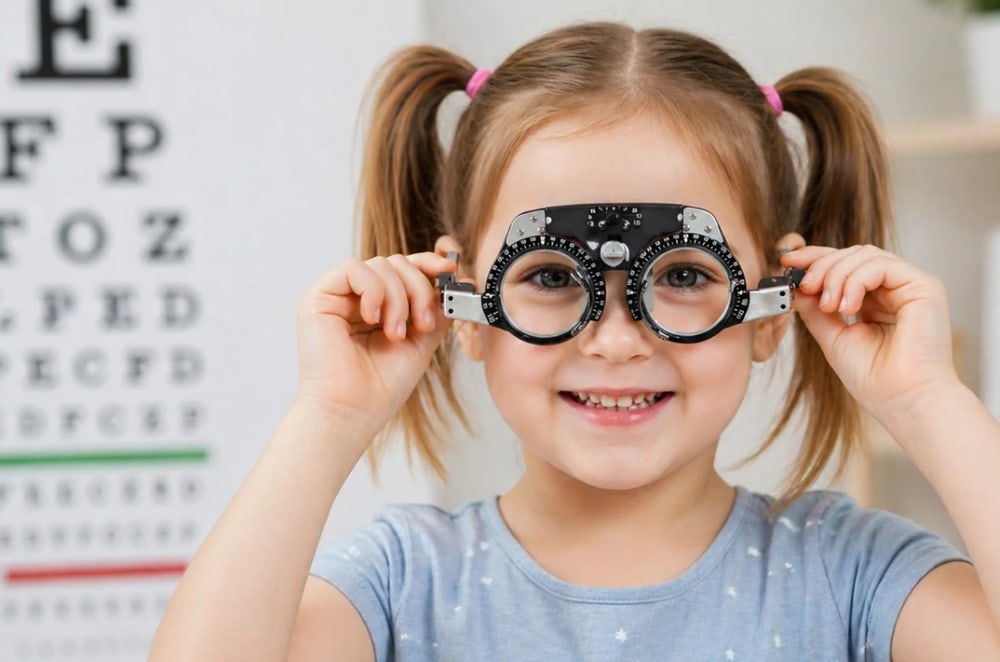
If your child is found to have a refractive error, well-fitted children's glasses make an important contribution to healthy visual development. As children grow and their eyes continue to change, we regularly review and adjust their eyewear.
What matters most with children's glasses:
- Lightweight, well-fitting frames
- Flexible, padded temples and soft nose pads
- Secure fit behind the ears
- Lenses correctly positioned at eye height
What matters most with children's glasses:
Squinting — early detection and targeted treatment
Squinting is one of the most common causes of vision problems in childhood. At our practice, your child's eye alignment is examined by a specially trained orthoptist.
Orthoptists specialise in diagnosing and treating squint disorders, amblyopia, and disorders of binocular vision.
Depending on the findings, simple measures such as glasses or temporary patching of one eye can already be effective. If needed, we will advise you comprehensively on further treatment options.
Myopia control — effectively slowing short-sightedness
An increasing number of children are becoming short-sighted. The progression of myopia in childhood can now be actively influenced. We offer modern treatment methods such as special spectacle lenses (DIMS technology) as well as low-dose atropine eye drops.
We also regularly monitor eye growth by precisely measuring axial eye length, allowing us to assess exactly how quickly the eye is growing and whether myopia is progressing. This enables objective monitoring of myopia-control measures and individually tailored treatment.
Our goal is to slow excessive eye growth at an early stage and reduce long-term vision problems.